April 24, 2015
Peter Singhatey
Articles on Africa
Africa, Immigration, mediterranean, People & Society, peter singhateh, Peter Singhatey
End deaths on the sea by ending the wars around it – Al Jazeera English.
“How to digest the reality of 1,500 dead migrants when most of the victims are lost to the sea; their hopes, dreams and even their names drowned with them?
Blame is of course being assigned; or rather deflected, divided, avoided. British stinginess, smugglers’ greed, ISIL’s savagery, European racism, the oppression of the Amazigh and the vagaries of war – each has its measure of truth. And however tragically dramatic, the present large-scale migration across the Mediterranean is only the latest in at least half a dozen cycles of mass global migration in the modern era.
Global capitalism and global war have always driven large-scale human migration…”
April 20, 2015
Peter Singhatey
Articles on Africa
Africa, Development, Farrafenni, Gambia, People & Society, peter singhateh, Peter Singhatey
Farafenni identified as one of Africa’s ‘Boom Towns’ – The Point Newspaper, Banjul, The Gambia.
The town of Farafenni in the North Bank Region of the Gambia has been identified by DHL as one of Africa’s ‘boom towns’ and cities that are enjoying growth on the back of growing industries and providing opportunities for African businesses.
In a statement issued in Cape Town, South Africa, on Thursday, DHL Express Sub-Saharan Africa (SSA) described Farafenni as being situated on the north bank of the Gambia River, about 120 kilometres inland from the capital Banjul.
It said the town is home to numerous banks and insurance firms and that it is experiencing fast growth mainly due to its geographical location on the main road between Dakar and Casamance (the southern area of Senegal), and its close proximity to the ferry crossing on the Gambia River….
April 20, 2015
Peter Singhatey
African Center for Strategic Studies
Africa, DR Congo, Fuelling DR Congo War, Gold, International Security, Ivory, peter singhateh, Peter Singhatey, UN
Billion dollar ivory and gold trade fuelling DR Congo war: UN – Times LIVE.
“Militarised criminal groups with transnational links are involved in large-scale smuggling” of “gold, minerals, timber, charcoal and wildlife products such as ivory” of up to $1.3 billion each year from eastern DR Congo, the UN Environment Programme (UNEP) said.
The revenues finance at least 25 armed groups — but up to 49 according to some estimates — that “increasingly fuel the conflict” in the war-torn region, the report read.
Control over the mineral-rich areas is a key factor in the conflicts that have raged in eastern DR Congo for decades.
“These resources lost to criminal gangs and fuelling the conflict could have been used to build schools, roads, hospitals and a future for the Congolese people,” said Martin Kobler, UN chief in DR Congo, and head of the 20,000-strong UN peacekeeping force, MONUSCO….
March 18, 2015
Peter Singhatey
African Center for Strategic Studies
Africa, Development, MDGs, peter singhateh, Peter Singhatey, UNDP
How to Make the Sustainable Development Goals Work | Foreign Policy.
“The two of us met for the first time more than a decade ago, in 2003, in the small rural village of Momemo, an hour’s drive and a world away from the urban bustle of Maputo, Mozambique’s capital and largest city. We were there to gain a deeper understanding of the impact of malaria on the lives of villagers in areas particularly hard hit by the disease.
But as we sat outdoors talking with a small group of villagers, the conversation covered a range of issues about the health and well-being of women and children in the village. How early did women marry here? How many children did they have? How many children had they lost to illness? Could they work and care for children severely sick with malaria?
Although the two of us came to that conversation with very different life experiences, we were drawn together by a common mission: enabling a healthier and more productive life for women and children in the poorest countries. Now we’re coming together again — this time to carry the voices of women like those we met in Momemo to a different conversation, one that will affect women everywhere for a generation to come.
As you read this, world leaders are engaged in discussions about a new global development plan that will succeed the Millennium Development Goals (MDGs) when they expire at the end of 2015…”
March 18, 2015
Peter Singhatey
Aviation
Africa, Aviation, Helicopter Crash, Mail, peter singhateh, Peter Singhatey
BBC News – Mali helicopter crash: Two Dutch UN peacekeepers die.
A Dutch UN helicopter has crashed near Gao in northern Mali, killing its two crew members, the Dutch defence ministry has said.
The Apache helicopter made a forced landing during a military exercise, the UN force in Mali said in a statement.
The Dutch armed forces chief, Gen Tom Middendorp, said: “Everything points to this being an accident.”
The aircraft was from the Minusma mission charged with peacekeeping since Islamist fighters were forced out.
One crew member survived the crash but died later of his injuries at a French field hospital, Gen Middendorp told a news conference in The Hague.
Gen Middendorp said an investigation into the cause of the crash was under way…
March 6, 2015
Peter Singhatey
Uncategorized
Africa, BBC, Ethiopia, Evolution, First Human, peter singhateh, Peter Singhatey
BBC News – ‘First human’ discovered in Ethiopia.
Scientists have unearthed the jawbone of what they claim is one of the very first humans.
The 2.8 million-year-old specimen is 400,000 years older than researchers thought that our kind first emerged.
The discovery in Ethiopia suggests climate change spurred the transition from tree dweller to upright walker.
The head of the research team told BBC News that the find gives the first insight into “the most important transitions in human evolution”…
March 6, 2015
Peter Singhatey
African Center for Strategic Studies
Africa, Gambia, Hezbollah, International Security, peter singhateh, Peter Singhatey, Senegal
Hezbollah’s operations in west Africa – Blogs – Jerusalem Post.
Last Thursday, the US Treasury Department imposed sanctions on three Lebanese individuals – Mustapha Fawaz, Fouzi Fawaz and Abdallah Tahini –accusing them of running a significant Hezbollah supply network in west Africa. The trio, all Lebanese-born but now residing in Nigeria’s capital Abuja, have a history of alleged links to Hezbollah.
According to the Treasury Department, Mustapha Fawaz has had ties with the group since the 1990s, organizing a network of hidden cameras to monitor the movement of Israelis. Fawaz is also rumored to have provided Hezbollah with a report of his visit to the US Embassy in Abuja. In May 2013, the Nigerian authorities detained him, whereupon he gave up crucial intelligence on Hezbollah’s activities throughout the country. Fawaz’s confession led the Nigerian security services to an unremarkable property in the Nigerian city of Kano, where they uncovered a veritable armory housing weapons to be used against Israeli targets across West Africa. Following this discovery, Mustapha’s brother – Fouzi Fawaz – along with Abdallah Tahini were apprehended by the Nigerian security forces and charged with supporting Hezbollah operations in the country. All three men have since been released.
Thursday’s sanctions were not the first time the Treasury Department has targeted individuals connected to Hezbollah in west Africa. In June of 2013, the United States blacklisted four Lebanese men – Ali Ibrahim al-Wafta, Abbas Loutfe Fawaz, Ali Ahmad Chehade and Hicham Nmer Khanafer – after they were accused of masterminding Hezbollah’s fundraising campaigns in Sierra Leone, Senegal, Cote d’Ivoire and the Gambia…
February 23, 2015
Peter Singhatey
Articles on Africa
Africa, corruption, Inequality, People & Society, peter singhateh, Peter Singhatey, Secret Bank Accounts
The Hidden Billions Behind Economic Inequality in Africa.
Reports this year of illicit moneys from African countries stashed in a Swiss bank – indicating that corruption lies behind much of the income inequality that affects the continent – have grabbed international news headlines.
Secret bank accounts in the HSBC’s Swiss private banking arm unearthed this year by the International Consortium of Investigative Journalists (ICIJ) were said to hold over 100 billion dollars, some of which came from Africa, including some of the poorest nations on the continent.
When these funds leave the region, they deny the very nations that need them most…
Older Entries
Newer Entries






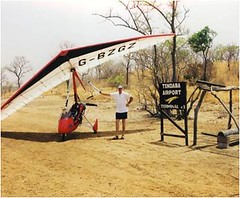













 Peter "Just Loves Flying"
You must be logged in to post a comment.