December 26, 2014
Peter Singhatey
Articles on Africa
Africa, Conflict, International Security, Peace & Security, peter singhateh, Peter Singhatey
U.N. Set to Cut Force in Darfur as Fighting Rises – NYTimes.com.
UNITED NATIONS — Under intense pressure from the government of Sudan, the United Nations is planning to shrink its floundering peacekeeping force in Darfur, even though renewed fighting there has chased more people from their homes this year than during any other in the past decade.
The withdrawal plans come right after the chief prosecutor of the International Criminal Court, Fatou Bensouda, announced that she had decided to suspend the genocide case against Sudan’s president, Omar Hassan al-Bashir, because world powers have done nothing to secure his arrest.
The twin retrenchments are emblematic of the limits of international attention at a time when Darfur has been overshadowed by newer crises and conflicts around the world, from the civil wars in Syria and South Sudan to the Ebola epidemic…
December 22, 2014
Peter Singhatey
African Center for Strategic Studies
Africa, Conflict, Development, Gambia, People & Society, peter singhateh, Peter Singhatey, Research
ISS Africa | Africa in 2014: the good, the bad and the ugly.
Africa is not a country. What might have been an excellent year for some was a disaster for others. For protesters in Burkina Faso who have known only one ruler for the last 27 years, 2014 was a very good year. The peaceful overthrow of Blaise Compaoré at the end of October was a victory for democracy. Whether the strong positioning of military officials in the transitional government will undermine the democratic gains remains to be seen.
Compaoré’s ouster inspired those rejecting their own leaders’ bids to stay on beyond their legal term limits, like in the Democratic Republic of the Congo (DRC), the Republic of Congo or Burundi – and sent a clear warning to leaders in countries like Zimbabwe, Uganda and Angola. The African Union (AU), which should give itself some credit for ensuring that Compaoré was replaced by a civilian-led government in Burkina Faso, also had quite a good year.
AU Commission Chairperson Nkosazana Dlamini-Zuma got the private sector to contribute to AU programmes, notably the AU Support Mission to Ebola Outbreak in West Africa. Following a fundraising meeting on 8 November, South African cellphone giant MTN came out tops with a sponsorship of $10 million for the fight against Ebola and Masiyiwa’s Econet donated $2,5 million…
December 18, 2014
Peter Singhatey
African Center for Strategic Studies
Africa, corruption, Dirty money, Gambia, People & Society, peter singhateh, Peter Singhatey, Research
Poor nations ‘lose $1 tn in dirty money’ – Americas – Al Jazeera English.
Developing countries are losing nearly a trillion dollars to crime and corruption, with the disappearance of dirty money hitting some of the world’s poorest regions hardest, a new report has found.
A record $991bn in unrecorded funds left 151 developing and emerging economies in 2012, up nearly five percent from a year earlier, a US-based watchdog that exposes financial corruption said on Monday.
Global Financial Integrity (GFI) found that, between 2003 and 2012, the estimated amount of illicit funds shifted from developing countries totalled $6.6tn and rose at an inflation-adjusted 9.4 percent a year – roughly double global GDP growth…
December 18, 2014
Peter Singhatey
Uncategorized
Africa, Development, peter singhateh, Peter Singhatey, Renewable Energy, United Nations
Renewable Energy: The Untold Story of an African Revolution.
“There is a revolution going on in the continent of Africa and the world is not noticing it. You can go to Egypt, Ethiopia Kenya, Namibia, and Mozambique. I think we will see renewable energy being the answer to Africa’s energy problems in the next fifteen years,” Steiner said in an interview with IPS.
Sharing the example of the UNEP headquarters in Nairobi, Kenya, Steiner told IPS that the decision was taken that “if UNEP is going to be centred with its offices in the African continent on the Equator, there can be reason why we are not using renewable energy. So we installed photovoltaic panels on our roof which we share with UN Habitat, 1200 people, and we produce 750,000 kilowatt hours of electricity every year, that is enough for the entire building to operate.”
He noted that although it will take UNEP between eight and 10 years to pay off the installation, UNEP will have over 13 years of electricity without paying monthly or annual power bills. “It is the best business proposition that a U.N. body has ever made in terms of paying for electricity for a building,” he said.
According to Steiner, the “revolution” is already happening in East Africa, especially in Kenya and Ethiopia which are both targeting renewable energy, especially geothermal energy.
“Kenya plans to triple its electricity generation up to about 6000 megawatts in the next five years. More than 90 percent of the planned power is to come from geothermal, solar and wind power,” he said…
November 30, 2014
Peter Singhatey
Uncategorized
Africa, Gambia, MDGs, peter singhateh, Peter Singhatey
UN: Most African Nations to Miss 2015 MDG Goals.
ADDIS ABABA—
Most African countries will not reach the Millennium Development Goals set for 2015 because of the gap between economic and human development. That is one of the conclusions in this year’s annual U.N. report on the Least Developed Countries, presented Thursday.
Junior Davis, U.N. economic affairs officer for Africa, said African countries have not been able to translate their economic growth into structural transformation.
“We think that is the case because these countries have not focused efficiently on building what we call their productive capacities,” Davis said. “These are the basic human and economic development capacities that are needed to promote sustainable economic development. And the MDG, as they were constructed, largely ignored the need to develop the productive capacities.”…
November 16, 2014
Peter Singhatey
Uncategorized
Africa, Conflict, International Security, ISIS, Middle East, peter singhateh, Peter Singhatey
The Ultimate Fatal Attraction: 5 Reasons People Join ISIS-Carnegie Middle East Center.
The Ultimate Fatal Attraction: 5 Reasons People Join ISIS-Carnegie Middle East Center
The appeal of the Islamic State to Arab and Muslim youth is hard to understand. Many assume religion or social media is the main draw for the increasing numbers who are uprooting their lives to join the militants in Iraq and Syria. But this is not the full story.
Five distinct trends—not including theology or technology—explain the fatal attraction to the Islamic State. And understanding these trends is vital for winning the war against extremist ideologies.
First, Arab education systems have failed. Instead of vital analytical skills or civic values, schools emphasized rote learning and the uncritical acceptance of authority.
History curricula and religious education fostered an us-versus-them mentality along ethnic, ideological, and sectarian lines, making youth vulnerable to external influence. This helped transform the cultural landscape of Arab countries, facilitating the spread of militant ideologies and the early indoctrination of younger populations…
November 2, 2014
Peter Singhatey
Uncategorized
Africa, Ebola, Liberia, People & Society, peter singhateh, Peter Singhatey
Braving Ebola – NYTimes.com.
Portraits of those who labor and those who survived at an Ebola treatment center in rural Liberia.
November 1, 2014
Peter Singhatey
Articles on Africa
Africa, Gambia, peter singhateh, Peter Singhatey, Proverty, Research
War on Poverty Turns 50: Are We Winning Yet? | Cato Institute.
War on Poverty is 50 years old. Over that time, federal and state governments have spent more than $19 trillion fighting poverty. But what have we really accomplished?
Although far from conclusive, the evidence suggests that we have successfully reduced many of the deprivations of material poverty, especially in the early years of the War on Poverty. However, these efforts were more successful among socioeconomically stable groups such as the elderly than low-income groups facing other social problems. Moreover, other factors like the passage of the Civil Rights Act, the expansion of economic opportunities to African Americans and women, increased private charity, and general economic growth may all have played a role in whatever poverty reduction occurred.
However, even if the War on Poverty achieved some initial success, the programs it spawned have long since reached a point of diminishing returns. In recent years we have spent more and more money on more and more programs, while realizing few, if any, additional gains. More important, the War on Poverty has failed to make those living in poverty independent or increase economic mobility among the poor and children. We may have made the lives of the poor less uncomfortable, but we have failed to truly lift people out of poverty.
The failures of the War on Poverty should serve as an object lesson for policymakers today. Good intentions are not enough. We should not continue to throw money at failed programs in the name of compassion…
Older Entries
Newer Entries









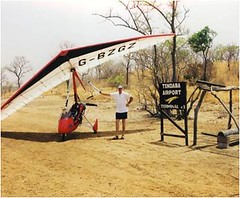














 Peter "Just Loves Flying"
You must be logged in to post a comment.