


Mauritius has retained its top slot as the leading democracy in Africa, while Somalia lagged at the furthest end, according to the 2015 Ibrahim Index of African Governance (IIAG).
Ibrahim Index: Democracy in Africa remains stagnant as Zimbabwe makes progress | Africa | DW.COM | 05.10.2015
October 6, 2015
Uncategorized Africa, Development, Education, Gambia, Ibrahim Index 2015, International Security, People & Society, peter singhateh, Peter Singhatey Leave a comment
EU Gives Africa U.S.$2 Billion to Stop Migration
September 29, 2015
Uncategorized Africa, Development, Gambia, Illegal Migrants, International Security, Migration, peter singhateh, Peter Singhatey Leave a comment
Kenya, Uganda and Tanzania are among African countries that will benefit from a $2.04 billion (€1.8 billion) emergency fund set up by the European Union to address the causes of migration and displacement of persons on the continent.
The fund, to be officially launched before the end of the year, will help the countries address socio-economic challenges that force people to migrate from their original homes.
“The EU will work to help African countries achieve economic development that tackles unemployment and prevents migration and radicalisation,” said the EU Commissioner for International Co-operation and Development Neven Mimica at a press briefing in Nairobi.
Other countries expected to benefit from the fund are Djibouti, Eritrea, Ethiopia, Somalia and South Sudan. In the Sahel region and Lake Chad area, the beneficiaries will be Burkina Faso, Cameroon, Chad, the Gambia, Mali, Mauritania, Niger, Nigeria and Senegal. In North Africa, Morocco, Algeria, Tunisia, Libya and Egypt will also be part of the group…
Erin Energy commences survey of Gambia’s offshore for oil – Foroyaa Newspaper
July 26, 2015
Articles on Africa Africa, Camac Energy, Erin Energy, Gambia, Offshore oil, peter singhateh, Peter Singhatey, Research, Seismic Survey Leave a comment
Erin Energy commences survey of Gambia’s offshore for oil – Foroyaa Newspaper.
Erin Energy Corporation through its subsidiary Camac Energy Gambia Limited, has commenced the shooting of a 3D seismic survey off the coast of The Gambia. Polarcus Ltd has been contracted by the Company to carry out the survey using the Polarcus Alima, an ultra-modern 12 streamer 3D/4D seismic vessel. The survey is expected to take approximately 50 days to complete and will cover approximately 1,500 square kilometres on Erin Energy’s A2 and A5 blocks…
Is ‘China in Africa’ something to fear? – The Washington Post
July 7, 2015
African Center for Strategic Studies Africa, China, Development, Gambia, People & Society, peter singhateh, Peter Singhatey, Research Leave a comment
Is ‘China in Africa’ something to fear? – The Washington Post.
Should the West fear China’s growing influence on the African continent? While there is no question that China and Chinese companies are changing the way African politicians seek aid and investment, the relationship between the two sides is far more complicated than simple narratives about “democracy or dictatorship” or “trade not aid” suggest. Veteran journalist Howard W. French explores this complexity in his book, “China’s Second Continent: How a Million Migrants are Building a New Empire in Africa.” He graciously took the time to answer my questions about the book and China’s role in Africa.
LS: Much of the discourse in American politics is that the U.S. should be afraid of China’s role in Africa because China is undemocratic or “trying to take over.” Is this a fair approach? Why or why not?
HF: I’m afraid the American discourse on China and Africa is very confused and generally not very insightful. Part of that is driven by the recent, still startled realization in this society of just how serious a competitor China is becoming, and part of that reflects the baggage of very old and nearly immutable American attitudes toward Africa, which are bound up in paternalism and in using Africa as a kind of vanity mirror to help us brighten our own self-image and feel better about ourselves…
Farafenni identified as one of Africa’s ‘Boom Towns’ – The Point Newspaper, Banjul, The Gambia
April 20, 2015
Articles on Africa Africa, Development, Farrafenni, Gambia, People & Society, peter singhateh, Peter Singhatey Leave a comment
Farafenni identified as one of Africa’s ‘Boom Towns’ – The Point Newspaper, Banjul, The Gambia.
The town of Farafenni in the North Bank Region of the Gambia has been identified by DHL as one of Africa’s ‘boom towns’ and cities that are enjoying growth on the back of growing industries and providing opportunities for African businesses.
In a statement issued in Cape Town, South Africa, on Thursday, DHL Express Sub-Saharan Africa (SSA) described Farafenni as being situated on the north bank of the Gambia River, about 120 kilometres inland from the capital Banjul.
It said the town is home to numerous banks and insurance firms and that it is experiencing fast growth mainly due to its geographical location on the main road between Dakar and Casamance (the southern area of Senegal), and its close proximity to the ferry crossing on the Gambia River….
Hezbollah’s operations in west Africa – Blogs – Jerusalem Post
March 6, 2015
African Center for Strategic Studies Africa, Gambia, Hezbollah, International Security, peter singhateh, Peter Singhatey, Senegal Leave a comment
Hezbollah’s operations in west Africa – Blogs – Jerusalem Post.
Last Thursday, the US Treasury Department imposed sanctions on three Lebanese individuals – Mustapha Fawaz, Fouzi Fawaz and Abdallah Tahini –accusing them of running a significant Hezbollah supply network in west Africa. The trio, all Lebanese-born but now residing in Nigeria’s capital Abuja, have a history of alleged links to Hezbollah.
According to the Treasury Department, Mustapha Fawaz has had ties with the group since the 1990s, organizing a network of hidden cameras to monitor the movement of Israelis. Fawaz is also rumored to have provided Hezbollah with a report of his visit to the US Embassy in Abuja. In May 2013, the Nigerian authorities detained him, whereupon he gave up crucial intelligence on Hezbollah’s activities throughout the country. Fawaz’s confession led the Nigerian security services to an unremarkable property in the Nigerian city of Kano, where they uncovered a veritable armory housing weapons to be used against Israeli targets across West Africa. Following this discovery, Mustapha’s brother – Fouzi Fawaz – along with Abdallah Tahini were apprehended by the Nigerian security forces and charged with supporting Hezbollah operations in the country. All three men have since been released.
Thursday’s sanctions were not the first time the Treasury Department has targeted individuals connected to Hezbollah in west Africa. In June of 2013, the United States blacklisted four Lebanese men – Ali Ibrahim al-Wafta, Abbas Loutfe Fawaz, Ali Ahmad Chehade and Hicham Nmer Khanafer – after they were accused of masterminding Hezbollah’s fundraising campaigns in Sierra Leone, Senegal, Cote d’Ivoire and the Gambia…
Is this the beginning of the end for the Ebola outbreak in West Africa? | GlobalPost
January 21, 2015
African Center for Strategic Studies Africa, Ebola, Gambia, Health, peter singhateh, Peter Singhatey Leave a comment
Is this the beginning of the end for the Ebola outbreak in West Africa? | GlobalPost.
Schools reopened in Guinea this week, just as Mali became the region’s latest country to be declared Ebola-free by the World Health Organization, following Nigeria and Senegal.
The two developments are signs that life is slowly returning to normal as West Africa recovers from the world’s worst-ever Ebola epidemic.
It is far from over yet. But there is, at last, hope that the end of the outbreak may be within sight.
There have been 21,614 cases of Ebola in this epidemic, and 8,594 deaths, according to the latest WHO figures. But crucially, the number of new cases is declining in Liberia, Sierra Leone and Guinea, the countries worst affected.
Last week Sierra Leone and Guinea both recorded their lowest weekly totals of confirmed cases since August, while Liberia had its lowest weekly total since June.
Dr. Tom Frieden, head of the Centers for Disease Control and Prevention in Atlanta, has said he is “confident” the outbreak can be ended, provided “nothing unexpected happens.”…
ISS Africa | Africa in 2014: the good, the bad and the ugly
December 22, 2014
African Center for Strategic Studies Africa, Conflict, Development, Gambia, People & Society, peter singhateh, Peter Singhatey, Research Leave a comment
ISS Africa | Africa in 2014: the good, the bad and the ugly.
Africa is not a country. What might have been an excellent year for some was a disaster for others. For protesters in Burkina Faso who have known only one ruler for the last 27 years, 2014 was a very good year. The peaceful overthrow of Blaise Compaoré at the end of October was a victory for democracy. Whether the strong positioning of military officials in the transitional government will undermine the democratic gains remains to be seen.
Compaoré’s ouster inspired those rejecting their own leaders’ bids to stay on beyond their legal term limits, like in the Democratic Republic of the Congo (DRC), the Republic of Congo or Burundi – and sent a clear warning to leaders in countries like Zimbabwe, Uganda and Angola. The African Union (AU), which should give itself some credit for ensuring that Compaoré was replaced by a civilian-led government in Burkina Faso, also had quite a good year.
AU Commission Chairperson Nkosazana Dlamini-Zuma got the private sector to contribute to AU programmes, notably the AU Support Mission to Ebola Outbreak in West Africa. Following a fundraising meeting on 8 November, South African cellphone giant MTN came out tops with a sponsorship of $10 million for the fight against Ebola and Masiyiwa’s Econet donated $2,5 million…






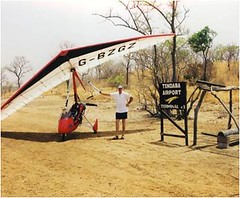














 Peter "Just Loves Flying"
You must be logged in to post a comment.