December 18, 2014
Peter Singhatey
African Center for Strategic Studies
Africa, corruption, Dirty money, Gambia, People & Society, peter singhateh, Peter Singhatey, Research
Poor nations ‘lose $1 tn in dirty money’ – Americas – Al Jazeera English.
Developing countries are losing nearly a trillion dollars to crime and corruption, with the disappearance of dirty money hitting some of the world’s poorest regions hardest, a new report has found.
A record $991bn in unrecorded funds left 151 developing and emerging economies in 2012, up nearly five percent from a year earlier, a US-based watchdog that exposes financial corruption said on Monday.
Global Financial Integrity (GFI) found that, between 2003 and 2012, the estimated amount of illicit funds shifted from developing countries totalled $6.6tn and rose at an inflation-adjusted 9.4 percent a year – roughly double global GDP growth…
November 30, 2014
Peter Singhatey
Uncategorized
Africa, Gambia, MDGs, peter singhateh, Peter Singhatey
UN: Most African Nations to Miss 2015 MDG Goals.
ADDIS ABABA—
Most African countries will not reach the Millennium Development Goals set for 2015 because of the gap between economic and human development. That is one of the conclusions in this year’s annual U.N. report on the Least Developed Countries, presented Thursday.
Junior Davis, U.N. economic affairs officer for Africa, said African countries have not been able to translate their economic growth into structural transformation.
“We think that is the case because these countries have not focused efficiently on building what we call their productive capacities,” Davis said. “These are the basic human and economic development capacities that are needed to promote sustainable economic development. And the MDG, as they were constructed, largely ignored the need to develop the productive capacities.”…
November 1, 2014
Peter Singhatey
Articles on Africa
Africa, Gambia, peter singhateh, Peter Singhatey, Proverty, Research
War on Poverty Turns 50: Are We Winning Yet? | Cato Institute.
War on Poverty is 50 years old. Over that time, federal and state governments have spent more than $19 trillion fighting poverty. But what have we really accomplished?
Although far from conclusive, the evidence suggests that we have successfully reduced many of the deprivations of material poverty, especially in the early years of the War on Poverty. However, these efforts were more successful among socioeconomically stable groups such as the elderly than low-income groups facing other social problems. Moreover, other factors like the passage of the Civil Rights Act, the expansion of economic opportunities to African Americans and women, increased private charity, and general economic growth may all have played a role in whatever poverty reduction occurred.
However, even if the War on Poverty achieved some initial success, the programs it spawned have long since reached a point of diminishing returns. In recent years we have spent more and more money on more and more programs, while realizing few, if any, additional gains. More important, the War on Poverty has failed to make those living in poverty independent or increase economic mobility among the poor and children. We may have made the lives of the poor less uncomfortable, but we have failed to truly lift people out of poverty.
The failures of the War on Poverty should serve as an object lesson for policymakers today. Good intentions are not enough. We should not continue to throw money at failed programs in the name of compassion…
October 19, 2014
Peter Singhatey
Uncategorized
Africa, Ebola, Gambia, peter singhateh, Peter Singhatey, tourism
Ebola takes toll on the Gambia from beyond its borders | World news | The Guardian.
Omar Jarju looks out across a row of empty sunbeds around the Djeliba hotel’s perfectly maintained pool, a few steps from the palm-fringed Kololi beach on the Gambia’s Atlantic coast. “Every day in my inbox I get emails from clients, who tell me they’ve been warned not to come,” he says, despondently. “They say ‘Omar do you have Ebola?’ and I say ‘Oh for God’s sake, no!’. Ebola is killing us, whether we have it or not.”
This week is only the start of the Gambia’s tourist season but Jarju, manager at the Djeliba, says the hotel is only 47% full, compared with 67% last year. Headlines about the rapid spread of Ebola in Sierra Leone, Liberia and Guinea are having a serious knock-on effect for other countries in the continent, according to the Gambia’s ministry of tourism…
September 30, 2014
Peter Singhatey
Articles on Africa
Africa, Gambia, misinformation, peter singhateh, Peter Singhatey, Responsible Journalism, West Africa
Get your Africa facts right: websites seek to stem flow of misinformation | World news | The Guardian.
Inaccurate media reports are hardly limited to Africa, but there’s a greater chance of international newspapers getting things wrong – and not admitting so – when it comes to the continent, Seay said.
“When most western outlets have just two or three people covering a continent of 11 million square miles, it very easy to make mistakes, even unintentionally. It’s a recipe for disaster in terms of quality of coverage.”
Around half of Africa Check’s investigations are triggered by readers wanting to know anything from the veracity of claims made by pop stars to supposed disease-busting local herbs. Operating out of Lagos and Johannesburg, the not-for-profit organisation funded by grants and individual donations has a team of five full-timers working alongside volunteers and freelancers, and hopes to expand to Kenya and Senegal next.
Anton Harber, a highly-regarded South African former investigative journalist and co-founder of the project, explained its ultimate aim. “I imagine a situation in which every public figure and journalist feels nervous about what they say or write because Africa Check might just catch them out.”
September 30, 2014
Peter Singhatey
Uncategorized
Africa, Gambia, Illegal Migrants, Migrant deaths, peter singhateh, Peter Singhatey
′Deadliest year′ for migrants crossing the Mediterranean: IOM | News | DW.DE | 29.09.2014.
More than 3,000 people have died trying to cross the Mediterranean this year, according to the International Organization for Migration. A report has been released showing more than 40,000 migrant deaths since 2000.
September 30, 2014
Peter Singhatey
Articles on Africa
Africa, Gambia, Illegal Migrants, People & Society, peter singhateh
Plight of the migrant one of most critical issues of our time.
“…In the space of a week 150,000 refugees from Syria streamed into Turkey, adding to the million-plus refugees Turkey has accommodated in the three-and-a-half years since the devastating conflict in Syria began. In one 48-hour period more than 60,000 Syrians came over the border. In 2014 the number of people seeking asylum will hit a 20-year high, according to the UNHCR, the United Nations refugee agency. That 20-year anniversary relates to April 28th and 29th, 1994 on the Rwandan-Tanzanian border, when 250,000 people walked across the bridge at Rusumo Falls, as victims of genocide floated past in the river below.
As Syrian Kurds carried what little they had left into Turkey, the sea that borders the west of the country was in the midst of its own nightmare. The New York Times reported this month that at a funeral in Sicily of 18 migrants who died trying to reach Europe from Africa, Msgr Angelo Giurdanella said in his homily: “The opposite of love is not hatred, but indifference.” Around 120,000 migrants have been rescued by Italian ships in the Mediterranean this year. More than 2,200 have died trying to cross the Mediterranean this year. In a few days in mid-September, at least 750 migrants were feared to have died trying to make the crossing. To put those deaths in context in terms of media coverage, the Costa Concordia cruise ship disaster in January, 2012 claimed 32 lives. Nearly 70 times that number of migrants have died in the Mediterranean area trying to reach Europe so far this year…”
September 30, 2014
Peter Singhatey
Articles on Africa
Africa, Gambia, Illegal Migrants, People & Society, peter singhateh, Peter Singhatey
Hundreds feared dead as boat sinks off Libya – Middle East – Al Jazeera English.
A boat filled with up to 250 migrants heading for Europe has sunk off the Libyan coast and many passengers have died, a spokesman for the Libyan navy has said.
Only 36 people, including three women, have been rescued after the boat sunk near Tajoura, east of the capital Tripoli, said navy spokesman Ayub Qassem.
“There are so many dead bodies floating in the sea,” Qassem told the Reuters news agency, adding that the under-equipped coastguard had few resources to search for survivors.
Migrants have been streaming out of Libya in boats in rising numbers for years, on their way to Europe.
So far in 2014, more than 100,000 have reached Italy’s shores, the Italian government said this week…
Older Entries
Newer Entries









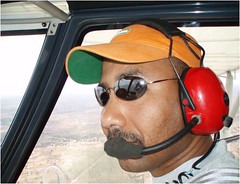
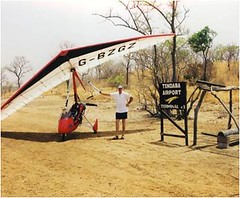














 Peter "Just Loves Flying"
You must be logged in to post a comment.