


Mauritius has retained its top slot as the leading democracy in Africa, while Somalia lagged at the furthest end, according to the 2015 Ibrahim Index of African Governance (IIAG).
Ibrahim Index: Democracy in Africa remains stagnant as Zimbabwe makes progress | Africa | DW.COM | 05.10.2015
October 6, 2015
Uncategorized Africa, Development, Education, Gambia, Ibrahim Index 2015, International Security, People & Society, peter singhateh, Peter Singhatey Leave a comment
The Troubles Are Back – The New York Times
October 5, 2015
Uncategorized Good Friday Agreement, International Security, Northern Ireland, Peace & Security, peter singhateh, Peter Singhatey, Research, Sectarian Divisions Leave a comment
Peace in Northern Ireland relied on a flawed power-sharing deal that set sectarian divisions in stone.
Source: The Troubles Are Back – The New York Times
LONDONDERRY, Northern Ireland — IT is widely assumed that the Northern Ireland conflict was settled in 1998 with the signing of the Good Friday Agreement. The war was over and the good guys had won.
Many Americans may even derive satisfaction from the role played by American presidents and political grandees — notably, President Clinton’s point man, George J. Mitchell, who presided over the negotiations leading to the agreement.
Yet the deal delivered by Senator Mitchell contained the seeds of its own destruction. In effect, the Good Friday Agreement assigned every person in Northern Ireland to either the unionist or nationalist camp, and the decision-making institutions it created, the Northern Ireland Assembly and its accompanying Executive, were designed to be balanced between the two camps. The plan was not to eliminate sectarianism, but to manage its manifestations…
Young and dyslexic? You’ve got it going on | Benjamin Zephaniah | Comment is free | The Guardian
October 5, 2015
Uncategorized dyslexic, Education, peter singhateh, Peter Singhatey, Research 1 Comment
As a child I suffered, but learned to turn dyslexia to my advantage, to see the world more creatively. We are the architects, we are the designers
Source: Young and dyslexic? You’ve got it going on | Benjamin Zephaniah | Comment is free | The Guardian
I’m of the generation where teachers didn’t know what dyslexia was. The big problem with the education system then was that there was no compassion, no understanding and no humanity. I don’t look back and feel angry with the teachers. The ones who wanted to have an individual approach weren’t allowed to. The idea of being kind and thoughtful and listening to problems just wasn’t done: the past is a different kind of country…
things smart people won’t say out loud
October 2, 2015
Uncategorized Office Etiquette, peter singhateh, Peter Singhatey, Smart People, Work Ethic Leave a comment
http://www.businessinsider.com/what-smart-people-wont-say-out-loud-2015-9?IR=T
There are some things you simply never want to say at work.
There’s no taking them back once they slip out, either.
I’m not talking about shocking slips of the tongue, off-color jokes, or politically incorrect faux pas. These aren’t the only ways to make yourself look bad.
Often, it’s the subtle remarks–the ones that paint us as incompetent and unconfident–that do the most damage.
No matter how talented you are or what you’ve accomplished, there are certain phrases that instantly change the way people see you and can forever cast you in a negative light. These phrases are so loaded with negative implications that they undermine careers in short order.
How many of these career killers have you heard around the office lately?
1. “It’s not fair.”
Everyone knows that life isn’t fair. Saying “it’s not fair” suggests that you think life is supposed to be fair, which makes you look immature and naive.
If you don’t want to make yourself look bad, you need to stick to the facts, stay constructive, and leave your interpretation out of it. For instance, you could say, “I noticed that you assigned Ann that big project I was hoping for. Would you mind telling me what went into that decision? I’d like to know why you thought I wasn’t a good fit, so that I can work on improving those skills.”
2. “This is the way it’s always been done.”
Technology-fueled change is happening so fast that even a six-month-old process could be outdated. Saying “this is the way it’s always been done” not only makes you sound lazy and resistant to change…
EU Gives Africa U.S.$2 Billion to Stop Migration
September 29, 2015
Uncategorized Africa, Development, Gambia, Illegal Migrants, International Security, Migration, peter singhateh, Peter Singhatey Leave a comment
Kenya, Uganda and Tanzania are among African countries that will benefit from a $2.04 billion (€1.8 billion) emergency fund set up by the European Union to address the causes of migration and displacement of persons on the continent.
The fund, to be officially launched before the end of the year, will help the countries address socio-economic challenges that force people to migrate from their original homes.
“The EU will work to help African countries achieve economic development that tackles unemployment and prevents migration and radicalisation,” said the EU Commissioner for International Co-operation and Development Neven Mimica at a press briefing in Nairobi.
Other countries expected to benefit from the fund are Djibouti, Eritrea, Ethiopia, Somalia and South Sudan. In the Sahel region and Lake Chad area, the beneficiaries will be Burkina Faso, Cameroon, Chad, the Gambia, Mali, Mauritania, Niger, Nigeria and Senegal. In North Africa, Morocco, Algeria, Tunisia, Libya and Egypt will also be part of the group…
Lack of computers in schools may be a blessing – OECD report
September 17, 2015
Uncategorized Education, Ireland, Lack of Computers, People & Society, peter singhateh, Peter Singhatey Leave a comment
Intense computer use in class linked to ‘significantly poorer student performance’
Source: Lack of computers in schools may be a blessing – OECD report
Ireland has one of the lowest rates of internet use in schools in the world but, ironically, it may be doing students more good than harm, according to a global study published on Tuesday.
The report by the educational wing of the OECD into the impact of computer and internet use on test scores shows there is “no appreciable improvements in student achievement in reading, mathematics or science in the countries that had invested heavily in ICT [Information and Communications Technology] for education”.
Ireland is ranked fifth from the bottom for use of ICT in schools, and fourth from the bottom for the use of ICT for schoolwork at home, the report shows. Irish teenagers spend on average 16 minutes on the internet at school during weekdays compared to an OECD average of 25 minutes, and a high of 58 minutes in Australia…
Parsing the Iran Deal
August 6, 2015
International Security Carnegie, International Security, Iran, Iran Nuclear Deal, JCPOA, Middle East, peter singhateh, Peter Singhatey Leave a comment
“On July 14, 2015, Iran and the five permanent members of the UN Security Council plus Germany (P5+1) concluded a Joint Comprehensive Plan of Action (JCPOA) concerning the future of Iran’s nuclear program. The deal, which is the outcome of more than two years of negotiations, includes limits on Iran’s nuclear program as well as provisions for verification, implementation, procurement, sanctions relief, and peaceful nuclear cooperation. It singles out specific nuclear sites in Iran for particular scrutiny and restrictions, including the enrichment facilities at Natanz and Fordow and the heavy-water reactor, with its supporting facilities, at Arak. Unsurprisingly, the deal is complex—the text and its five annexes stretch to over 100 pages.
Our aim here is to analyze the deal as impartially and objectively as possible…”
Sad About Cecil? These African Animals Are Slaughtered by the Thousands – The Daily Beast
August 3, 2015
African Center for Strategic Studies Africa, Cecil, Dentist, peter singhateh, Peter Singhatey, Trophy Hunting Leave a comment
Sad About Cecil? These African Animals Are Slaughtered by the Thousands – The Daily Beast.
JUBA, South Sudan — A hopeful myth persists in this region that “wildlife refugees”—fauna in flight from war-ravaged habitats—will return one day when the conflict is over. Would that it were so. But in South Sudan, no end of the conflict appears in sight, and amid vast human suffering, nature is being ravaged as well.
The great icons of the wild—the elephants, the rhinos, the leopards and lions (so beloved of trophy hunting dentists and the heedless offspring of the outrageously rich) are gone or going fast. Conservationists say the “charismatic megafauna” are nearly wiped out here. No northern white rhino has been spotted in the region since 1981; only 2,500 elephant remain in all of South Sudan…”






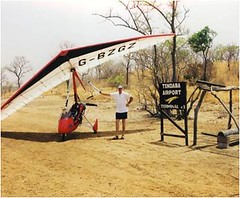












 Peter "Just Loves Flying"
You must be logged in to post a comment.