April 20, 2015
Peter Singhatey
Articles on Africa
Africa, Development, Farrafenni, Gambia, People & Society, peter singhateh, Peter Singhatey
Farafenni identified as one of Africa’s ‘Boom Towns’ – The Point Newspaper, Banjul, The Gambia.
The town of Farafenni in the North Bank Region of the Gambia has been identified by DHL as one of Africa’s ‘boom towns’ and cities that are enjoying growth on the back of growing industries and providing opportunities for African businesses.
In a statement issued in Cape Town, South Africa, on Thursday, DHL Express Sub-Saharan Africa (SSA) described Farafenni as being situated on the north bank of the Gambia River, about 120 kilometres inland from the capital Banjul.
It said the town is home to numerous banks and insurance firms and that it is experiencing fast growth mainly due to its geographical location on the main road between Dakar and Casamance (the southern area of Senegal), and its close proximity to the ferry crossing on the Gambia River….
April 20, 2015
Peter Singhatey
African Center for Strategic Studies
Africa, DR Congo, Fuelling DR Congo War, Gold, International Security, Ivory, peter singhateh, Peter Singhatey, UN
Billion dollar ivory and gold trade fuelling DR Congo war: UN – Times LIVE.
“Militarised criminal groups with transnational links are involved in large-scale smuggling” of “gold, minerals, timber, charcoal and wildlife products such as ivory” of up to $1.3 billion each year from eastern DR Congo, the UN Environment Programme (UNEP) said.
The revenues finance at least 25 armed groups — but up to 49 according to some estimates — that “increasingly fuel the conflict” in the war-torn region, the report read.
Control over the mineral-rich areas is a key factor in the conflicts that have raged in eastern DR Congo for decades.
“These resources lost to criminal gangs and fuelling the conflict could have been used to build schools, roads, hospitals and a future for the Congolese people,” said Martin Kobler, UN chief in DR Congo, and head of the 20,000-strong UN peacekeeping force, MONUSCO….
April 9, 2015
Peter Singhatey
Uncategorized
People & Society, peter singhateh, Peter Singhatey, Research, Science, sexiness
The science of sexiness: why some people are just more attractive – Telegraph.
A new study suggests that long-distance runners are more attractive because they have greater levels of testosterone which makes them more manly and fertile.
But there are other biological and evolutionary triggers which are constantly drawing us to certain individuals, even if we don’t realise it is happening. Scientists in Geneva discovered that determining whether we are attracted to someone is one of the most complex tasks that the brain undertakes. Here are the scientific secrets of attraction:
Symmetry
Charles Darwin once wrote: “It is certainly not true that there is in the mind of man any universal standards of beauty with respect to the human body.”
Probably the most important is facial symmetry….
March 31, 2015
Peter Singhatey
Social Media
Facebook, peter singhateh, Peter Singhatey, Sasinan Thamnithinan, Thailand
Thai man jailed for 25 years over royal insult posts on Facebook.
A Thai military court on Tuesday jailed a man for 25 years for posting pictures on his Facebook page deemed insulting to Thailand’s monarchy, in one of the toughest such sentences in recent years.
Thailand’s lese-majeste law is the world’s harshest and makes it a crime to defame, insult or threaten the king, queen or heir to the throne or regent.
Since taking power in a May coup, Prime Minister Prayuth Chan-ocha, a staunch royalist, has repeatedly vowed to vigorously pursue royal insult cases and try those perceived to be anti-monarchists.
In the latest case, Tiensutham Suttijitseranee, a 58-year-old businessman, was found guilty of posting defamatory content in a closed-door court sentencing, his lawyer told Reuters.
“The court decided that because he posted five pictures with captions last year that the court deemed defamatory, he would be sentenced to a total of 50 years; ten years for each picture posted, reduced by half to 25 years,” lawyer Sasinan Thamnithinan told Reuters, adding that the term was halved because Tiensutham pleaded guilty.
The court did not allow his relatives and reporters to attend the verdict, she said…
March 18, 2015
Peter Singhatey
International Security
Conflict, International Security, peter singhateh, Peter Singhatey, Research, Terrorism
Where Terrorism Research Goes Wrong – NYTimes.com.
“TERRORISM is increasing. According to the Global Terrorism Database at the University of Maryland, groups connected with Al Qaeda and the Islamic State committed close to 200 attacks per year between 2007 and 2010, a number that grew by more than 200 percent, to about 600 attacks, in 2013.
Since 9/11, the study of terrorism has also increased. Now, you might think that more study would lead to more effective antiterrorism policies and thus to less terrorism. But on the face of it, this does not seem to be happening. What has gone wrong?
The answer is that we have not been conducting the right kind of studies. According to a 2008 review of terrorism literature in the journal Psicothema, only 3 percent of articles from peer-reviewed sources appeared to be rooted in empirical analysis, and in general there was an “almost complete absence of evaluation research” concerning antiterrorism strategies…”
March 18, 2015
Peter Singhatey
African Center for Strategic Studies
Africa, Development, MDGs, peter singhateh, Peter Singhatey, UNDP
How to Make the Sustainable Development Goals Work | Foreign Policy.
“The two of us met for the first time more than a decade ago, in 2003, in the small rural village of Momemo, an hour’s drive and a world away from the urban bustle of Maputo, Mozambique’s capital and largest city. We were there to gain a deeper understanding of the impact of malaria on the lives of villagers in areas particularly hard hit by the disease.
But as we sat outdoors talking with a small group of villagers, the conversation covered a range of issues about the health and well-being of women and children in the village. How early did women marry here? How many children did they have? How many children had they lost to illness? Could they work and care for children severely sick with malaria?
Although the two of us came to that conversation with very different life experiences, we were drawn together by a common mission: enabling a healthier and more productive life for women and children in the poorest countries. Now we’re coming together again — this time to carry the voices of women like those we met in Momemo to a different conversation, one that will affect women everywhere for a generation to come.
As you read this, world leaders are engaged in discussions about a new global development plan that will succeed the Millennium Development Goals (MDGs) when they expire at the end of 2015…”
March 18, 2015
Peter Singhatey
Aviation
Africa, Aviation, Helicopter Crash, Mail, peter singhateh, Peter Singhatey
BBC News – Mali helicopter crash: Two Dutch UN peacekeepers die.
A Dutch UN helicopter has crashed near Gao in northern Mali, killing its two crew members, the Dutch defence ministry has said.
The Apache helicopter made a forced landing during a military exercise, the UN force in Mali said in a statement.
The Dutch armed forces chief, Gen Tom Middendorp, said: “Everything points to this being an accident.”
The aircraft was from the Minusma mission charged with peacekeeping since Islamist fighters were forced out.
One crew member survived the crash but died later of his injuries at a French field hospital, Gen Middendorp told a news conference in The Hague.
Gen Middendorp said an investigation into the cause of the crash was under way…
March 6, 2015
Peter Singhatey
Uncategorized
Africa, BBC, Ethiopia, Evolution, First Human, peter singhateh, Peter Singhatey
BBC News – ‘First human’ discovered in Ethiopia.
Scientists have unearthed the jawbone of what they claim is one of the very first humans.
The 2.8 million-year-old specimen is 400,000 years older than researchers thought that our kind first emerged.
The discovery in Ethiopia suggests climate change spurred the transition from tree dweller to upright walker.
The head of the research team told BBC News that the find gives the first insight into “the most important transitions in human evolution”…
Older Entries
Newer Entries









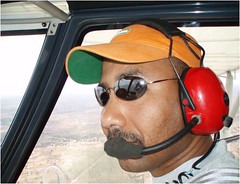
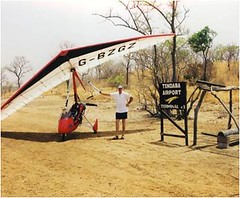














 Peter "Just Loves Flying"
You must be logged in to post a comment.