September 8, 2014
Peter Singhatey
Uncategorized
Africa, Ebola, epidemic, People & Society, peter singhateh, Peter Singhatey, Research
Ebola: Misinformation can spread like virus.
Much of the reporting around ebola is rife with rumours and misconceptions. In my experience, there seem to be three main popular misconceptions around the viral outbreak.The first is that it is easy to contract ebola. Due to the gruesome nature in which the virus manifests itself in humans, people are understandably terrified of contracting ebola. Anecdotes abound about how people are scared of being on an airplane in the same confined space as anyone travelling from West Africa. However, ebola is not airborne and cannot be contracted by simply sitting beside someone and breathing the same air. Concern Worldwide have dedicated staff on the ground in both Sierra Leone and Liberia, none of whom have contracted the virus or come even close….
August 31, 2014
Peter Singhatey
Uncategorized
Conflict, International Security, People & Society, peter singhateh, Peter Singhatey, Research
Backdrop to an Intervention: Sources of Egyptian-Libyan Border Tension – Carnegie Endowment for International Peace.
The airstrikes that Emirati forces with Egyptian support conducted against militia positions in Libya in late August 2014 were sparked by an anti-Islamist military campaign in eastern Libya. The campaign, led by retired General Khalifa Hifter and a breakaway faction of the Libyan military, has profoundly altered Egyptian-Libyan relations. But the roots of Egyptian meddling in Libya run deeper than Hifter’s current operation.
Among Libya’s many afflictions, none is more threatening to Egypt than the two states’ nearly 700-mile-long shared border. Border policing in Libya has always been weak and ill-defined—even under Muammar Qaddafi—but it has suffered a catastrophic decline following the dictator’s overthrow in 2011. Oversight of borders has devolved to a constellation of eastern militias that are only tenuously connected to the government and that, in many cases, are colluding in the very smuggling they are meant to combat. The border is now North Africa’s eastern thoroughfare for weapons, fighters, illegal migrants, and illicit goods flowing into the Levant, with profoundly destabilizing effects on the Sinai, Gaza, and Syria…
June 18, 2014
Peter Singhatey
Aviation
Aviation, Helicopter, peter singhateh, Peter Singhatey, Pilot, Research
A Helicopter of One’s Own – NYTimes.com.
If we had our own personal mini-helicopters that were almost as easy to fly as cars are to drive, and we could take off from our backyards, soar over the traffic and peer down at the earthbound masses, trudging along below.
That would be cool.
As it turns out, the European Union is making plans for that very thing. Six research institutions across Europe are studying the feasibility of small commuter helicopters, helped along by a $4.7 million grant from the European government in a project dubbed “MyCopter.”..
June 15, 2014
Peter Singhatey
Uncategorized
Africa, peter singhateh, Peter Singhatey, Proverty, Research
No Money, No Time – NYTimes.com.
THE absurdity of having had to ask for an extension to write this article isn’t lost on me: It is, after all, a piece on time and poverty, or, rather, time poverty — about what happens when we find ourselves working against the clock to finish something. In the case of someone who isn’t otherwise poor, poverty of time is an unpleasant inconvenience. But for someone whose lack of time is just one of many pressing concerns, the effects compound quickly.
We make a mistake when we look at poverty as simply a question of financial constraint. Take what happened with my request for an extension. It was granted, and the immediate time pressure was relieved. But even though I met the new deadline (barely), I’m still struggling to dig myself out from the rest of the work that accumulated in the meantime. New deadlines that are about to whoosh by, a growing list of ignored errands, a rent check and insurance payment that I just realized I haven’t mailed. And no sign of that promised light at the end of the tunnel.
My experience is the time equivalent of a high-interest loan cycle, except instead of money, I borrow time. But this kind of borrowing comes with an interest rate of its own:..
June 11, 2014
Peter Singhatey
Health
Health, obesity, peter singhateh, Peter Singhatey, Research
What Causes Weight Gain – NYTimes.com.
If I ask you what constitutes “bad” eating, the kind that leads to obesity and a variety of connected diseases, you’re likely to answer, “Salt, fat and sugar.” This trilogy of evil has been drilled into us for decades, yet that’s not an adequate answer.
We don’t know everything about the dietary links to chronic disease, but the best-qualified people argue that real food is more likely to promote health and less likely to cause disease than hyperprocessed food. And we can further refine that message: Minimally processed plants should dominate our diets. (This isn’t just me saying this; the Institute of Medicine and the Department of Agriculture agree.)
And yet we’re in the middle of a public health emergency that isn’t being taken seriously enough. We should make it a national priority to create two new programs, a research program to determine precisely what causes diet-related chronic illnesses (on top of the list is “Just how bad is sugar?”), and a program that will get this single, simple message across: Eat Real Food…
May 29, 2014
Peter Singhatey
Uncategorized
Health, obesity, peter singhateh, Research
Michelle Obama on Attempts to Roll Back Healthy Reforms – NYTimes.com.
WHEN we began our Let’s Move! initiative four years ago, we set one simple but ambitious goal: to end the epidemic of childhood obesity in a generation so that kids born today will grow up healthy.
To achieve this goal, we have adhered to one clear standard: what works. The initiatives we undertake are evidence-based, and we rely on the most current science. Research indicated that kids needed less sugar, salt and fat in their diets, so we revamped school lunch menus accordingly. When data showed that the lack of nearby grocery stores negatively affected people’s eating habits, we worked to get more fresh-food retailers into underserved areas. Studies on habit formation in young children drove our efforts to get healthier food and more physical activity into child care centers.
Today, we are seeing glimmers of progress. Tens of millions of kids are getting better nutrition in school; families are thinking more carefully about food they eat, cook and buy…
May 16, 2014
Peter Singhatey
Health
Education, obesity, People & Society, peter singhateh, Research
Always Hungry? Here’s Why – NYTimes.com.
FOR most of the last century, our understanding of the cause of obesity has been based on immutable physical law. Specifically, it’s the first law of thermodynamics, which dictates that energy can neither be created nor destroyed. When it comes to body weight, this means that calorie intake minus calorie expenditure equals calories stored. Surrounded by tempting foods, we overeat, consuming more calories than we can burn off, and the excess is deposited as fat. The simple solution is to exert willpower and eat less.
The problem is that this advice doesn’t work, at least not for most people over the long term. In other words, your New Year’s resolution to lose weight probably won’t last through the spring, let alone affect how you look in a swimsuit in July. More of us than ever are obese, despite an incessant focus on calorie balance by the government, nutrition organizations and the food industry.
But what if we’ve confused cause and effect? What if it’s not overeating that causes us to get fat, but the process of getting fatter that causes us to overeat?
The more calories we lock away in fat tissue, the fewer there are circulating in the bloodstream to satisfy the body’s requirements. If we look at it this way, it’s a distribution problem: We have an abundance of calories, but they’re in the wrong place. As a result, the body needs to increase its intake. We get hungrier because we’re getting fatter.
May 2, 2014
Peter Singhatey
Articles on Africa
Africa, Gambia, Money Laundering, peter singhateh, Poverty Reduction, Research, West Africa
Out of Africa: The great money migration – Features – Al Jazeera English.
“Almost $2 trillion has left Africa illicitly since 1970, thwarting poverty reduction and economic growth.
The figures are staggering: At least $1.8 trillion illicitly flowed out of Africa between 1970 and 2009.
This is far more than the external aid the continent received over the same period, and almost five times its current external debt. According to researchers, the continent also loses at least $100bn a year in this financial haemorrhage.
African leaders convened this week in the Ethiopian city of Bahar Dar to discuss illicit financial flows and what can be done to staunch them. A study commissioned by the Tana High Level Forum on African Security, which organised the conference, found that illicit flows from Africa grew at an average rate of 12.1 percent per year since 1970, and that capital flight from West and Central African countries accounted for most of the illicit flows from sub-Saharan Africa…”
Older Entries
Newer Entries










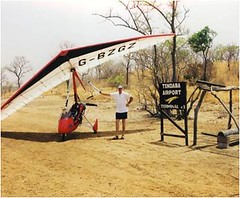














 Peter "Just Loves Flying"
You must be logged in to post a comment.