


On The Edge Of …
April 9, 2015


The science of sexiness: why some people are just more attractive – Telegraph
April 9, 2015
Uncategorized People & Society, peter singhateh, Peter Singhatey, Research, Science, sexiness Leave a comment
The science of sexiness: why some people are just more attractive – Telegraph.
A new study suggests that long-distance runners are more attractive because they have greater levels of testosterone which makes them more manly and fertile.
But there are other biological and evolutionary triggers which are constantly drawing us to certain individuals, even if we don’t realise it is happening. Scientists in Geneva discovered that determining whether we are attracted to someone is one of the most complex tasks that the brain undertakes. Here are the scientific secrets of attraction:
Symmetry
Charles Darwin once wrote: “It is certainly not true that there is in the mind of man any universal standards of beauty with respect to the human body.”
However recent research suggests that there are universal agreements about beauty which hold true across all cultures and even throughout the animal kingdom.
Probably the most important is facial symmetry….
Reverse Brain Drain
March 26, 2015


For decades, countries in Africa, Latin America, Eastern Europe or countries like China, India or South Korea have witnessed how their economies miss out on the skills of their valuable human capital that lives abroad. The brain drain phenomenon has been around for decades, in a few words it means the migration of highly skilled, trained or educated individuals from one country to another. Unsurprisingly, the predominant pattern of brain drain is characterized by the migration from less developed to more developed countries.
Usually, human capital flight or brain drain is a byproduct of several factors like economics, politics, or security. While some individuals willingly leave their countries in pursuit of better economic or professional prospects, others flee their countries of origin as a consequence of turmoil, political instability or insecurity.
According to data from the International Monetary Fund (IMF), Iran has been one of the countries most affected by the brain drain…
View original post 1,283 more words
A World of Remittances
March 26, 2015
Relevant & Informative!

The term “remittance” has been long associated with the following words: migrants and the name of any major money-transfer company. The truth is, the world has been overlooking and underestimating the influence of something that goes beyond what has been thought to be irrelevant or insignificant money transfers. The fact is, remittances are much more important than we actually think they are.
According to the World Bank, by 2016 global remittances will reach a new record high $686 billion, of which $516 billion would go to less developed countries. If we put these numbers into perspective and compare them to other major financial inflows, we reach to the conclusion that remittances are actually three times higher than official development assistance aid, and in many countries (with the exception of China) remittances actually represent a larger share than Foreign Direct Investments (FDI).
Only until recently, our approach to remittances has shifted…
View original post 1,068 more words
Why overpraising may be responsible for a generation of narcissistic children – Independent.ie
March 20, 2015
Education Early Education, peter singhateh, Research, Self-Esteem Leave a comment
Why overpraising may be responsible for a generation of narcissistic children – Independent.ie.
A new study – carried out by Eddie Brummelman and colleagues at the University of Amsterdam – suggests that the constant praising of our children’s smallest accomplishments may have the unintended side effect of creating over-inflated egos.
The study evaluated more than 560 children between the ages of seven and 11 over 18 months. It found that parental overvaluation was the largest cause of narcissism in a child, but did not necessarily provide them with good self-esteem.
So, while we think that telling our children they’re fantastic all the time is building up their confidence, it doesn’t necessarily have that effect.
“People with high self-esteem think they’re as good as others, whereas narcissists think they’re better than others,” said Brad Bushman, the co-author of the study.
“Children believe it when their parents tell them that they are more special than others. That may not be good for them or for society.”
Parents need to be careful. Raising a child who thinks they are superior to others and believes they deserve special treatment can have serious consequences, both in childhood and later on in life…
Respond, Not React
March 18, 2015
Awesome


I choose to respond
rather than react
selecting from unlimited choices
from the highest possibilities
grounded in conscious living
Sometimes–more often now
my response is loving silence
stillness of the soul
centered in knowing
no longer pushed and pulled
by external forces
serene acceptance
of who I am
Where Terrorism Research Goes Wrong – NYTimes.com
March 18, 2015
International Security Conflict, International Security, peter singhateh, Peter Singhatey, Research, Terrorism Leave a comment
Where Terrorism Research Goes Wrong – NYTimes.com.
“TERRORISM is increasing. According to the Global Terrorism Database at the University of Maryland, groups connected with Al Qaeda and the Islamic State committed close to 200 attacks per year between 2007 and 2010, a number that grew by more than 200 percent, to about 600 attacks, in 2013.
Since 9/11, the study of terrorism has also increased. Now, you might think that more study would lead to more effective antiterrorism policies and thus to less terrorism. But on the face of it, this does not seem to be happening. What has gone wrong?
The answer is that we have not been conducting the right kind of studies. According to a 2008 review of terrorism literature in the journal Psicothema, only 3 percent of articles from peer-reviewed sources appeared to be rooted in empirical analysis, and in general there was an “almost complete absence of evaluation research” concerning antiterrorism strategies…”







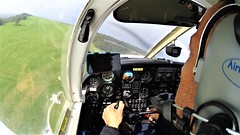

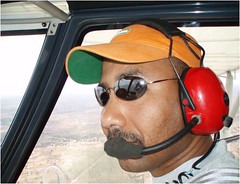
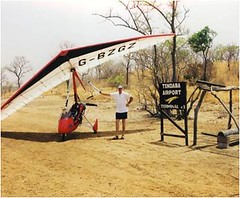














 Peter "Just Loves Flying"
You must be logged in to post a comment.