June 17, 2014 at 04:53AM
http://feeds.wired.com/c/35185/f/661370/s/3b915096/l/0L0Swired0N0C20A140C0A60Ccoinpocket0C/story01.htm
By Deepak verma
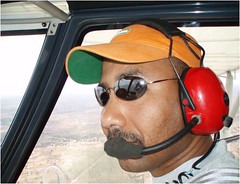
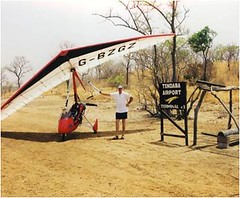
Peter Joseph Singhatey – "Just Love Flying"
June 16, 2014

June 15, 2014

via 500px http://ift.tt/SYQkq8
June 15, 2014
Uncategorized Africa, peter singhateh, Peter Singhatey, Proverty, Research Leave a comment
No Money, No Time – NYTimes.com.
THE absurdity of having had to ask for an extension to write this article isn’t lost on me: It is, after all, a piece on time and poverty, or, rather, time poverty — about what happens when we find ourselves working against the clock to finish something. In the case of someone who isn’t otherwise poor, poverty of time is an unpleasant inconvenience. But for someone whose lack of time is just one of many pressing concerns, the effects compound quickly.
We make a mistake when we look at poverty as simply a question of financial constraint. Take what happened with my request for an extension. It was granted, and the immediate time pressure was relieved. But even though I met the new deadline (barely), I’m still struggling to dig myself out from the rest of the work that accumulated in the meantime. New deadlines that are about to whoosh by, a growing list of ignored errands, a rent check and insurance payment that I just realized I haven’t mailed. And no sign of that promised light at the end of the tunnel.
My experience is the time equivalent of a high-interest loan cycle, except instead of money, I borrow time. But this kind of borrowing comes with an interest rate of its own:..
June 10, 2014
Uncategorized peter singhateh, Peter Singhatey, sport, world cup Leave a comment
5 Things You Need To Know About The 2014 World Cup In Brazil « CBS Charlotte.
The World Cup, possibly the most popular international sporting event, starts this week in Brazil. The world is abuzz as many of soccer’s best players, representing 32 countries, seek to dethrone Spain, the reigning champion.
The World Cup is held every four years in a different country. National teams qualify through a series of regional games; the host country gets an automatic bid. The actual tournament, unfolding over the course of a month, includes a group stage and a knockout stage. In the group stage, each team plays the other three teams in its group. The top two finishers from each group move on to the knockout stage, which eventually determines the champion.
The United States men’s national soccer team has qualified for every World Cup since 1990. Not a traditional powerhouse, the U.S. enters this tournament ranked thirteenth in the world. The team is not expected to make it out of the group stage.
But stranger things have happened…
June 9, 2014
Uncategorized Africa, Gambia, Malaria, peter singhateh, Peter Singhatey Leave a comment
How to Beat Malaria, Once and for All – NYTimes.com.
MAE SOT, Thailand — MALARIA is a seasonal disease; with tropical rains come the fevers. In the news media, malaria is also seasonal. Every spring around World Malaria Day we hear about its devastating effects, including deaths in the hundreds of thousands. This year the reports were encouraging: Infections have been reduced and many lives saved. In May, researchers reported in Science that yet another potential malaria vaccine may be around the corner. Malaria seems to be on the retreat.
But is it really?
Malaria is caused by a tiny parasite, transported by a particular type of mosquito from person to person. Preventing mosquito bites by using insect repellents or nets and clothing treated with insecticides can reduce malaria in some areas. And if people are infected, drugs can be used to kill the parasites in their blood.
But the mosquitoes are constantly adapting and becoming resistant to the chemicals, while at the same time the parasites are adapting and becoming resistant to the drugs. So the fight against malaria is really a race against time in which we try to develop new treatments before they become ineffective, causing millions to die…
June 4, 2014

June 4, 2014
Great initiative, hope it materialises.
The U.S. is involved in the training of nuclear experts in Africa and has signed agreements for the design of small nuclear reactors which they said will drastically resolve energy shortfalls in Africa by 2023.Moniz, currently in Africa to popularise U.S. President, Barack Obama’s “Power Africa initiative’’, said while his Department was more focused on Africa’s natural gas projects, the issue of nuclear energy featured.The energy talks focused on how the U.S. can assist some 240 million people to access electricity in six African countries.The African countries are; Ethiopia, Ghana, Kenya, Nigeria, Liberia and Tanzania through a new plan, Beyond the Grid, focused on rural electrification plans.Secretary Moniz said the U.S. Energy Department provided assistance to two private companies to build new nuclear reactors that could help to solve the safety concerns.The African Union (AU) warned last week that African countries with plans to build nuclear power plants should await…
View original post 88 more words
June 2, 2014
Nice flow to your writing and a captivating account of the events covered. Very interesting. Many thanks, Peter
How to make the best use of your neck-top computer.
See around
"Can You Match My Resolve"
Your travel guide to the fantastic unknown places around the world.
Director at Natraj Trekking
The Truth for Kyle
I love to write about everything. Writing relaxes me.
Ogni settimana un articolo per riflettere e discutere - Luigi Bacco
Original Oil Paintings in Progress
Photos, travel, armchair travel, cat tales, random thoughts
Recollect. Reimagine. Express
The Life & Ramblings Of A Zillennial
Change your thoughts and transform your life
Human Created Content - Creative Writing - Australia
Jane Lurie Photography
Architectural, interior and garden design, cool materials and resources, and other things that matter to me
A journey into the labyrinth of my sceptical mind.
Reflections, observations and adventures of a garden geek
You must be logged in to post a comment.