Home

The 7 Hardest Parts About Becoming A Private Pilot 

3 Comments

Everyone knows that crosswind landings are usually challenging for student pilots. But beyond landings (and money!), there’s a lot about learning to fly that can be pretty tough. Here’s what you should be ready for.

The 7 Hardest Parts About Becoming A Private Pilot

By Swayne Martin

Everyone knows that crosswind landings are usually challenging for student pilots. But beyond landings (and money!), there’s a lot about learning to fly that can be pretty tough. Here’s what you should be ready for…

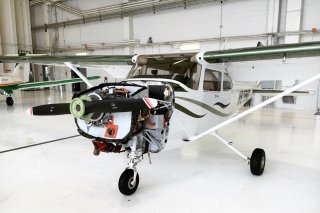
1) Aircraft Systems
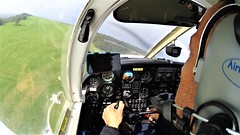
One of the toughest topics for private pilot students is aircraft systems. As less and less people grow up working on cars or around machinery, there’s diminishing knowledge behind what makes that engine turn.Want to know more about the systems and equipment in your aircraft? Dig into your POH and read section 7. Better yet, find a local A&P at your airport and have them walk you through a few systems with the cowling off. Getting hands-on with the equipment behind closed panels is a great way to learn how your airplane flies.
2) The National Airspace System
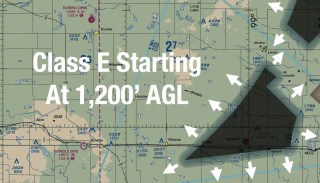
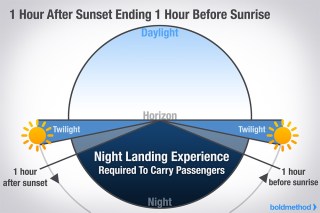
It’s more than identifying lines of airspace on a sectional chart. You’ll need to know what weather minimums exist at different altitudes (day and night), what your equipment requirements are, and what your communication requirements are.
We can help – give our National Airspace System course a try.
3) Learning Regulations
There are hundreds of FAA Regulations that govern how, where, and when you can fly. Some of them can be pretty confusing. As a student pilot, you’re just as responsible for adhering to the FARs as any fully certificated pilot. Keep yourself out of trouble and learn those regs!
4) Aerodynamics
A huge part of learning to fly is understanding the physics behind how it all works. But how can a strong foundation of aerodynamics save your life? One simple example is the lift to drag ratio for your airplane. At L/D max, or the best lift to drag ratio, you’ll find an approximate best glide speed.

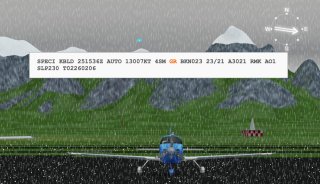
5) Decoding Textual Weather
Whether it’s a METAR or PIREP, it’s your responsibility as a pilot to maintain your skills for decoding textual weather.
Need a refresher? Give our Aviation Weather Products course a try.
6) “Radio Talk”
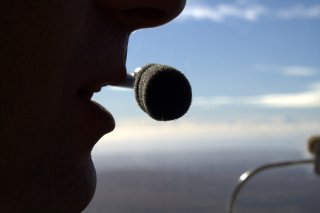
Learning how to actively listen for your callsign in busy airspace with dozens of airplanes on-frequency is tough. Adding that to learning the correct verbiage provides quite the task for brand new student pilots. Here are some things you shouldn’t say over the radio.
7) Getting Into “School Mode”
First and foremost, getting your brain into a “school mode” can be tough, especially if you haven’t sat in a formal classroom setting in years. Learning to fly is undoubtedly fun, but there’s also a lot of work outside the cockpit.
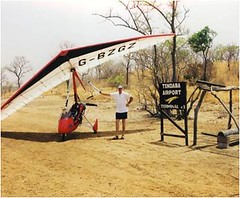
Microlight Trikes Active Recreation by GleBB

Leave a comment

Travel and active recreation. Photo outdoors. Series « Travel, nature and active recreation». Landscape. The natural lighting. via 500px http://ift.tt/2jIMd2B

via Popular on 500px : Microlight trikes _ active recreation by GleBB — Photo Snapping

Why Jet Lag Is Worse than You Think

Leave a comment

If you’re traveling cross-country to run a race or participate in a sporting event, you may want to prepare for the time change in advance. A new study of professional baseball players shows that jet lag doesn’t just affect mental performance—it can also affect physical performance, as well. The authors say their findings can have implications for all types of athletes, and they offer strategies for lessening the impact.

The new study, published in Proceedings of the National Academy of Sciences from researchers at Northwestern University, looked at Major League Baseball data from more than 40,000 games spanning 20 years, including teams’ travel schedules and players’ performance in hitting, running, pitching and more.

Traveling two or more time zones before a game affected play in subtle but detectible ways, the authors found. For example, teams from eastern states who had just returned home from a game out west tended to have fewer stolen bases, doubles and triples, and were subject to more double plays, than those who hadn’t traveled as recently.

Pitchers from both home and away teams also gave up more home runs after traveling eastward. The effects are enough to erase a team’s home-field advantage, the authors say. They speculate that jet lag may have even played a role in Game 6 of the 2016 National Championship Series, in which the home-team Chicago Cubs scored five runs off the visiting Los Angeles Dodgers’ ace pitcher, Clayton Kershaw.

The effects of west-to-east travel were stronger than those of east-to-west travel, supporting the argument that they are due to the body’s circadian clock—not just time on an airplane or scheduling issues in general, says Dr. Ravi Allada, associate director of Northwestern’s Center for Sleep and Circadian Biology.

The study isn’t the first to show that jet lag can impact athletic performance. Allada says the new findings add to the evidence that jet lag isn’t just all in one’s head. “We know, based on studies in animals and humans, that when you misalign your internal biological clock with your external environment, there can be a lot of consequences in terms of health,” Allada says. “And the circadian clock is present in muscle cells, too, so it makes sense that one might see an impairment in muscle activity or muscle efficiency, as a result of this misalignment.”

Based on these findings, Allada recommends that baseball teams send their starting pitchers to games across the country a day or two early, when possible, so that their internal clocks can adjust to the local environment.

Similar advice could also apply to anyone traveling for athletic events—especially eastward—he adds, like runners going to a destination marathon or adventure race. That also includes people who have been away and are heading home for an event: an aspect of jet lag that people don’t often think about, says Allada.

“The rule of thumb is that the body clock can shift about one hour a day, so if you’re traveling across three time zones, you’d want to ideally give yourself three days to adjust,” he says.

If your schedule won’t allow for an earlier trip, he recommends faking it for a few days by trying to wake up and go to bed according to the time-zone of your event, even while you’re still at home. If you’re traveling west-to-east, exposing yourself to bright light earlier in the morning can help, as well.

Allada says there’s not yet a lot of research to back up the effectiveness of these strategies, but he believes they could benefit anyone looking to optimize their performance. “That’s something we’d love to study in the future,” he says, “to work with athletes and see if these interventions actually have real impacts.”

via Why Jet Lag Is Worse than You Think — TIME

How To Make A Perfect Crosswind Landing | Boldmethod

Leave a comment


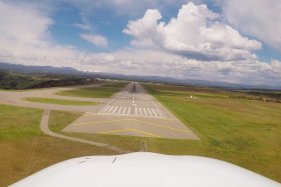
You’re picking up ATIS on your way in to land. The winds are 23 knots, 40 degrees off runway heading. And your passengers are expecting a landing they can walk away from.
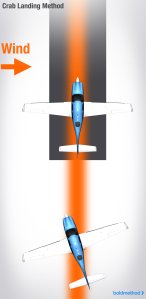
Crosswind landings can be one of the most stressful things for pilots, especially if you haven’t practiced them in awhile. And whether you’re a new pilot just learning to fly them, or a 20 year pilot who hasn’t gotten a lot of practice recently, a little review can go a long way.

When it comes to crosswind landings, there are a couple methods you can use: crab, and wing-low. And there are advantages and disadvantages to both.

Flying The Crab Method

With the crab technique, you fly final approach crabbing into the wind to prevent drifting left or right of centerline. You maintain the crab all the way to your flare, and just before touchdown, you step on the rudder to align your nose with the runway, and use ailerons to prevent drifting with the wind.

The crab technique can be an easy way to maintain centerline on final approach, but it requires quite a bit of judgement and timing to “kick out” the crab just before touchdown. This is the same technique that jets use to land. But there’s a big difference between a 737 and a single-engine piston, and that’s inertia. If a 737 isn’t perfectly aligned with the runway on touchdown, it straightens itself out as the wheels touch down, and it keeps rolling smoothly down the runway. But if your 172 isn’t aligned with the runway at touchdown, you’re going to jump and bounce across the pavement until you are aligned with it. So unless you’re out practicing your crab-to-landing a lot, it can be a tough method to perfect in a light plane.

rudder-usecrab

Flying The Wing-Low Method

In most cases in light aircraft, the wing low method is an easier way to accomplish a smooth touchdown in a crosswind landing. To fly the wing-low method, you use your rudder to line your nose up with the runway, and ailerons to correct for left/right drift all the way from final approach to touchdown. Essentially, you’re slipping the plane through the crosswind in order to keep yourself lined up with the runway from final to touchdown…

crosswind-procedurewheel-order

Source: How To Make A Perfect Crosswind Landing | Boldmethod

The Women Pilots History Forgot

Leave a comment

(CNN)More than 100 years after Harriet Quimby broke down barriers as the first woman to earn a pilot certificate, there are still very few women who choose flying as a career. Worldwide, only 3% of airline pilots are women, the Royal Aeronautical Society said earlier this month. Now, there’s a move to change that.  And the obvious place to begin is by highlighting the achievements of the long-forgotten queens of the air — the women who ignored the men who scorned them, broke through the restrictions society placed on them, and paved the way for Amelia Earhart.

Continue to read the full article on here.

Source: The Women Pilots History Forgot

Cessna 152 Multiple Spins Recovery (Full HD) – YouTube

Leave a comment

This is a spectacular video of a Cessna 152 recovering from a spin.

Thanks to Cheesecake Nijia and Boldmethod for sharing…

Coming To An Airport Near You: The Cirrus Vision Jet | Boldmethod

1 Comment

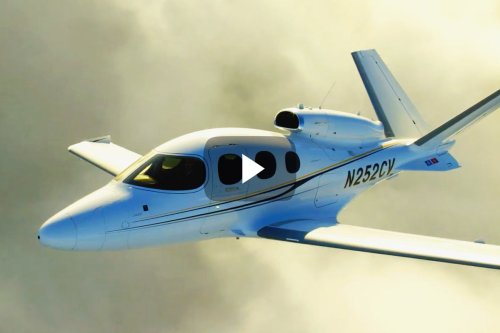
The world’s first personal jet just received FAA certification. And with deliveries starting this year, it’s coming to an airport near you. How’s that for an early Christmas present?

Want to learn more about the Vision Jet? Check it out here.

The world’s first personal jet just received FAA certification.

Source: Coming To An Airport Near You: The Cirrus Vision Jet | Boldmethod

Newer Entries

Bring Your Own Brain

How to make the best use of your neck-top computer.

The Cerebral Hedonist

"Can You Match My Resolve"

Delusional Bubble

Your travel guide to the fantastic unknown places around the world.

Anil Blon

Director at Natraj Trekking

MAJAALIFEE

I love to write about everything. Writing relaxes me.

TORINO NELLA RETE

Ogni settimana un articolo per riflettere e discutere - Luigi Bacco

Mikki Senkarik

Original Oil Paintings in Progress

Journeys with Eileen Diane

Photos, travel, armchair travel, cat tales, random thoughts

What's on Sid's mind

Recollect. Reimagine. Express

Lifesfinewhine

The Life & Ramblings Of A Zillennial

Thoughtsnlifeblog

Change your thoughts and transform your life

Something to Ponder About

Human Created Content - Creative Writing - Australia

Jane's Lens

Jane Lurie Photography

The Creative Flux

Architectural, interior and garden design, cool materials and resources, and other things that matter to me

Perception

A journey into the labyrinth of my sceptical mind.

Flutter & Hum

Reflections, observations and adventures of a garden geek