


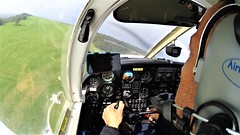
Travel and active recreation. Photo outdoors. Series « Travel, nature and active recreation». Landscape. The natural lighting. via 500px http://ift.tt/2jIMd2B
via Popular on 500px : Microlight trikes _ active recreation by GleBB — Photo Snapping
January 29, 2017
Aviation, Flying, Just love flying, Microlight Aircraft, Uncategorized Just love flying, Madox Airsports, peter singhateh, Peter Singhatey Leave a comment
Travel and active recreation. Photo outdoors. Series « Travel, nature and active recreation». Landscape. The natural lighting. via 500px http://ift.tt/2jIMd2B
via Popular on 500px : Microlight trikes _ active recreation by GleBB — Photo Snapping
January 25, 2017
Aviation, Education, Health, Uncategorized Health, Just love flying, Peter Singhatey, PeterSinghateh, Science Leave a comment
 If you’re traveling cross-country to run a race or participate in a sporting event, you may want to prepare for the time change in advance. A new study of professional baseball players shows that jet lag doesn’t just affect mental performance—it can also affect physical performance, as well. The authors say their findings can have implications for all types of athletes, and they offer strategies for lessening the impact.
The new study, published in Proceedings of the National Academy of Sciences from researchers at Northwestern University, looked at Major League Baseball data from more than 40,000 games spanning 20 years, including teams’ travel schedules and players’ performance in hitting, running, pitching and more.
Traveling two or more time zones before a game affected play in subtle but detectible ways, the authors found. For example, teams from eastern states who had just returned home from a game out west tended to have fewer stolen bases, doubles and triples, and were subject to more double plays, than those who hadn’t traveled as recently.
Pitchers from both home and away teams also gave up more home runs after traveling eastward. The effects are enough to erase a team’s home-field advantage, the authors say. They speculate that jet lag may have even played a role in Game 6 of the 2016 National Championship Series, in which the home-team Chicago Cubs scored five runs off the visiting Los Angeles Dodgers’ ace pitcher, Clayton Kershaw.
The effects of west-to-east travel were stronger than those of east-to-west travel, supporting the argument that they are due to the body’s circadian clock—not just time on an airplane or scheduling issues in general, says Dr. Ravi Allada, associate director of Northwestern’s Center for Sleep and Circadian Biology.
The study isn’t the first to show that jet lag can impact athletic performance. Allada says the new findings add to the evidence that jet lag isn’t just all in one’s head. “We know, based on studies in animals and humans, that when you misalign your internal biological clock with your external environment, there can be a lot of consequences in terms of health,” Allada says. “And the circadian clock is present in muscle cells, too, so it makes sense that one might see an impairment in muscle activity or muscle efficiency, as a result of this misalignment.”
Based on these findings, Allada recommends that baseball teams send their starting pitchers to games across the country a day or two early, when possible, so that their internal clocks can adjust to the local environment.
Similar advice could also apply to anyone traveling for athletic events—especially eastward—he adds, like runners going to a destination marathon or adventure race. That also includes people who have been away and are heading home for an event: an aspect of jet lag that people don’t often think about, says Allada.
“The rule of thumb is that the body clock can shift about one hour a day, so if you’re traveling across three time zones, you’d want to ideally give yourself three days to adjust,” he says.
If your schedule won’t allow for an earlier trip, he recommends faking it for a few days by trying to wake up and go to bed according to the time-zone of your event, even while you’re still at home. If you’re traveling west-to-east, exposing yourself to bright light earlier in the morning can help, as well.
Allada says there’s not yet a lot of research to back up the effectiveness of these strategies, but he believes they could benefit anyone looking to optimize their performance. “That’s something we’d love to study in the future,” he says, “to work with athletes and see if these interventions actually have real impacts.”
January 9, 2017
Education Dublin, Ireland, People & Society, peter singhateh, Peter Singhatey, Research Leave a comment
Fee-paying schools are expected to enjoy a Brexit bounce, as well as benefit from a new drive to recruit international second-level students to Ireland.
Major financial corporations, such as banks and insurance companies, are turning their eyes to Dublin as an EU base in anticipation of the UK’s departure from the EU.
Children’s education is high on the list of priorities for executives who are being asked to relocate with their families, with school fees a typical part of the remuneration package.
“This is happening anyway, but a lot more is expected post-Brexit,” said one source in the financial world who is already dealing with such queries.
Typically, HR personnel from the companies involved come to check out what’s available, with a focus on the fee-paying sector.
Meanwhile, there is a growing international market in second-level students, similar to what happens at third-level, from families in central and south-east Asia who want an English-speaking education for their children.
Source: Drive to bring more international students here – Independent.ie
January 5, 2017
Education, Health Education, obesity, People & Society, peter singhateh, Peter Singhatey Leave a comment
With kids consuming half their sugar quota first thing, it’s no wonder they’re getting diabetes and liver disease. We have to fight corporate interests
Breakfast is considered by most nutrition experts, including Public Health England, to be the most important meal of the day. It gets your brain and your metabolism going, and it suppresses the hunger hormone in your stomach so you won’t overeat at lunch. But in our busy lives, it’s easy to turn to what is quick, cheap, or what you can eat on the go. Cold cereal. Instant oatmeal. For those die-hard “I’m gonna serve something hot for breakfast” types, it’s microwaveable breakfast sandwiches. Gotta get out the door now? Granola bars. Protein bars. Yoghurt smoothies.
Sadly, as the National Diet and Nutrition Survey found, what you’re really doing is giving your children a huge sugar load while sending them on their way: half of their daily intake on average. There’s a reason that the World Health Organisationand the United States Department of Agriculture have provided upper limits of sugar – because dietary sugar fries your kids’ liver and brain; just like alcohol.
Alcohol provides calories (7kcal/g), but not nutrition. There’s no biochemical reaction that requires it. When consumed chronically and in high dose, alcohol is toxic, unrelated to its calories or effects on weight. Not everyone who is exposed gets addicted, but enough do to warrant taxation and restriction of access, especially to children. Clearly, alcohol is not a food – it’s a dangerous drug, because it’s both toxic and abused.
Dietary sugar is composed of two molecules: glucose and fructose. Fructose, while an energy source (4kcal/g), is otherwise vestigial to humans; again, there is no biochemical reaction that requires it. But fructose is metabolised in the liver in exactly the same way as alcohol. And that’s why, when consumed chronically and at a high dose, fructose is similarly toxic and abused, unrelated to its calories or effects on weight. And that’s why our children now get the diseases of alcohol (type 2 diabetes, fatty liver disease), without alcohol. Because sugar is the “alcohol of the child”. Also similar to alcohol, sugared beverages are linked to behavioural problems in children…
January 2, 2017
Health eating habits, Health, People & Society, peter singhaeh, Peter Singhatey, sugar Leave a comment
It is in chicken stock, sliced cheese, bacon and smoked salmon, in mustard and salad dressing, in crackers and nearly every single brand of sandwich bread. It is all around us — in obvious ways and hidden ones — and it is utterly delicious.
It’s sugar, in its many forms: powdered sugar, honey, corn syrup, you name it. The kind you eat matters less than people once thought, scientific research suggests, and the amount matters much more. Our national sugar habit is the driving force behind the diabetes and obesity epidemics and may be a contributing factor to cancer and Alzheimer’s.
Like me, you’ve probably just finished a couple of weeks in which you have eaten a whole lot of tasty sugar. Don’t feel too guilty about it. But if you feel a little guilty about it, I’d like to make a suggestion.
Choose a month this year — a full 30 days, starting now or later — and commit to eating no added sweeteners. Go cold turkey, for one month…
December 18, 2016
Uncategorized feel the freedom, Gambia, Just love flying, Madox Airsports, Peter Singhatey Leave a comment
 You’re picking up ATIS on your way in to land. The winds are 23 knots, 40 degrees off runway heading. And your passengers are expecting a landing they can walk away from.
Crosswind landings can be one of the most stressful things for pilots, especially if you haven’t practiced them in awhile. And whether you’re a new pilot just learning to fly them, or a 20 year pilot who hasn’t gotten a lot of practice recently, a little review can go a long way.
When it comes to crosswind landings, there are a couple methods you can use: crab, and wing-low. And there are advantages and disadvantages to both.
With the crab technique, you fly final approach crabbing into the wind to prevent drifting left or right of centerline. You maintain the crab all the way to your flare, and just before touchdown, you step on the rudder to align your nose with the runway, and use ailerons to prevent drifting with the wind.
The crab technique can be an easy way to maintain centerline on final approach, but it requires quite a bit of judgement and timing to “kick out” the crab just before touchdown. This is the same technique that jets use to land. But there’s a big difference between a 737 and a single-engine piston, and that’s inertia. If a 737 isn’t perfectly aligned with the runway on touchdown, it straightens itself out as the wheels touch down, and it keeps rolling smoothly down the runway. But if your 172 isn’t aligned with the runway at touchdown, you’re going to jump and bounce across the pavement until you are aligned with it. So unless you’re out practicing your crab-to-landing a lot, it can be a tough method to perfect in a light plane.


In most cases in light aircraft, the wing low method is an easier way to accomplish a smooth touchdown in a crosswind landing. To fly the wing-low method, you use your rudder to line your nose up with the runway, and ailerons to correct for left/right drift all the way from final approach to touchdown. Essentially, you’re slipping the plane through the crosswind in order to keep yourself lined up with the runway from final to touchdown…


Source: How To Make A Perfect Crosswind Landing | Boldmethod
November 16, 2016
Uncategorized Democracy, Facebook, Gambia, People & Society, peter singhateh, Peter Singhatey, social media Leave a comment
Source: Opinion Today

| Many of the things that keep our democracy healthy don’t appear in the Constitution or any federal law. President Obama made this point Monday when talking about an orderly transition from one presidency to the next: |
| “It’s not something that the Constitution explicitly requires but it is one of those norms that are vital to a functioning democracy, similar to norms of civility and tolerance and a commitment to reason and facts and analysis.” |
| The last few words of that sentence were the ones that caught my attention, and I started thinking about them again after reading an Op-Ed by Zeynep Tufekci. |
| Tufekci, a University of North Carolina professor, makes the case that Facebook is in denial about its role in spreading misinformation. During the presidential campaign, Facebook helped spread falsehoods — the Pope endorsed Trump! — to millions of people. Those falsehoods appeared in fake news articles, and Facebook did nothing to inform their users that the material in them was simply made up. |
| Mark Zuckerberg, Facebook’s chief executive, has said it’s “pretty crazy” to believe that fake news influences people in any significant way, but Tufekci persuasively lays out evidence to the contrary. Multiple studies have shown — and common sense backs up — that Facebook influences opinions and behavior. |
| “These are not easy problems to solve, but there is a lot Facebook could do,” Tufekci wrote. “When the company decided it wanted to reduce spam, it established a policy that limited its spread.” The step that Facebook announced Monday— refusing to display advertisements in fake stories — isn’t sufficient. |
| The media is in the midst of a historical transition right now. Some old news sources are shrinking or disappearing, and others — many of which rely on Facebook — are rising. There is nothing wrong with this change. Our country has survived the fading of news powerhouses, like the Saturday Evening Post, Life magazine and live radio broadcasts, before. |
| But whatever forms the new information sources take, they do need to provide “reason and facts,” neither of which is partisan. A healthy democracy depends on it. As Thomas Jefferson said, the people need “full information of their affairs.” Zuckerberg, by believing that Facebook is staying neutral, has in fact made a damaging choice. |
| The full Opinion report from The Times follows, including Geoff Dembicki on generational war and climate change. |
| David Leonhardt Op-Ed Columnist. NY Times |
How to make the best use of your neck-top computer.
See around
"Can You Match My Resolve"
Your travel guide to the fantastic unknown places around the world.
Director at Natraj Trekking
The Truth for Kyle
I love to write about everything. Writing relaxes me.
Ogni settimana un articolo per riflettere e discutere - Luigi Bacco
Original Oil Paintings in Progress
Photos, travel, armchair travel, cat tales, random thoughts
Recollect. Reimagine. Express
The Life & Ramblings Of A Zillennial
Change your thoughts and transform your life
Human Created Content - Creative Writing - Australia
Jane Lurie Photography
Architectural, interior and garden design, cool materials and resources, and other things that matter to me
A journey into the labyrinth of my sceptical mind.
Reflections, observations and adventures of a garden geek








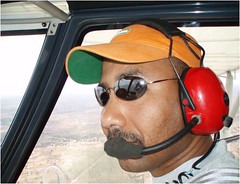
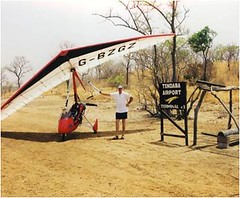














 Peter "Just Loves Flying"
You must be logged in to post a comment.